From November 2024 through pretty much today, weather and its residual effects have not been kind to Lifesprings Farm and Aviary. A harsh winter storm began in November and dumped close to three feet of snow in one day. After that, the snow kept coming and coming and coming. It was accompanied by brisk, cold air that lingered.
Needless to say, the winter was hard on the birds but we were able to make them comfortable. We had great hopes for spring.
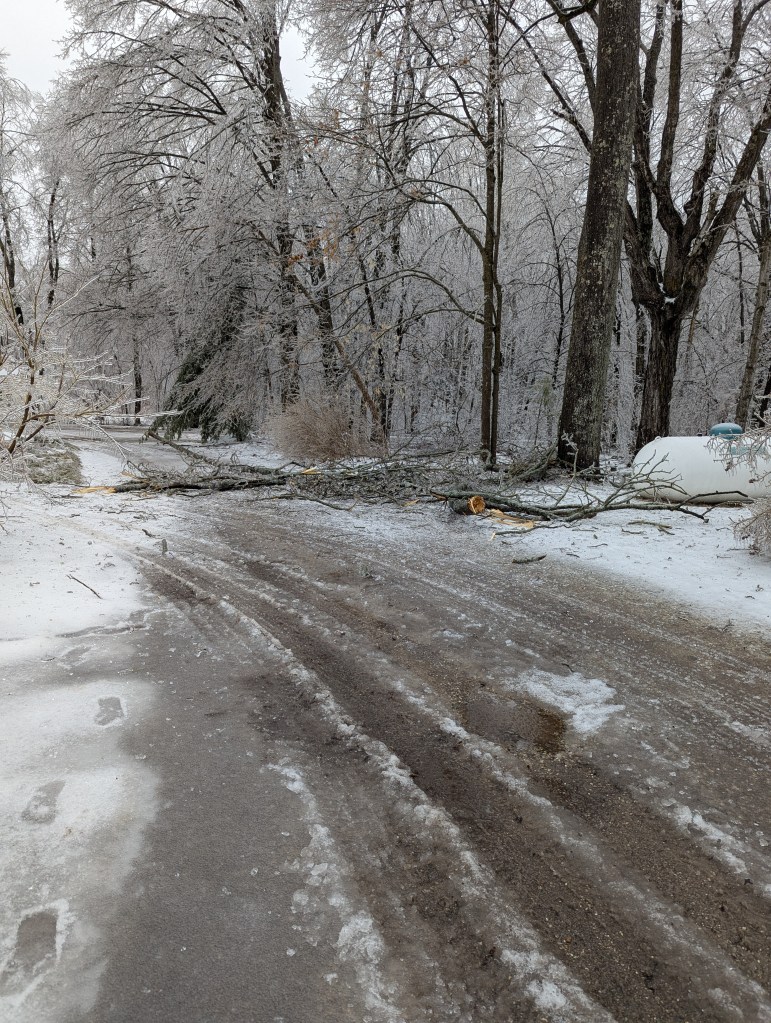
Then, on March 29, 2025, a fierce ice storm hit our area. We had freezing temperatures along with nonstop freezing rain for three solid days and nights. Half way through the first day, electricity for most went out. For us, the power was out for close to 12 days. Other, more rural folks than us, waited up to 3 weeks to see their electricity restored.
Driveway March 30, 2025
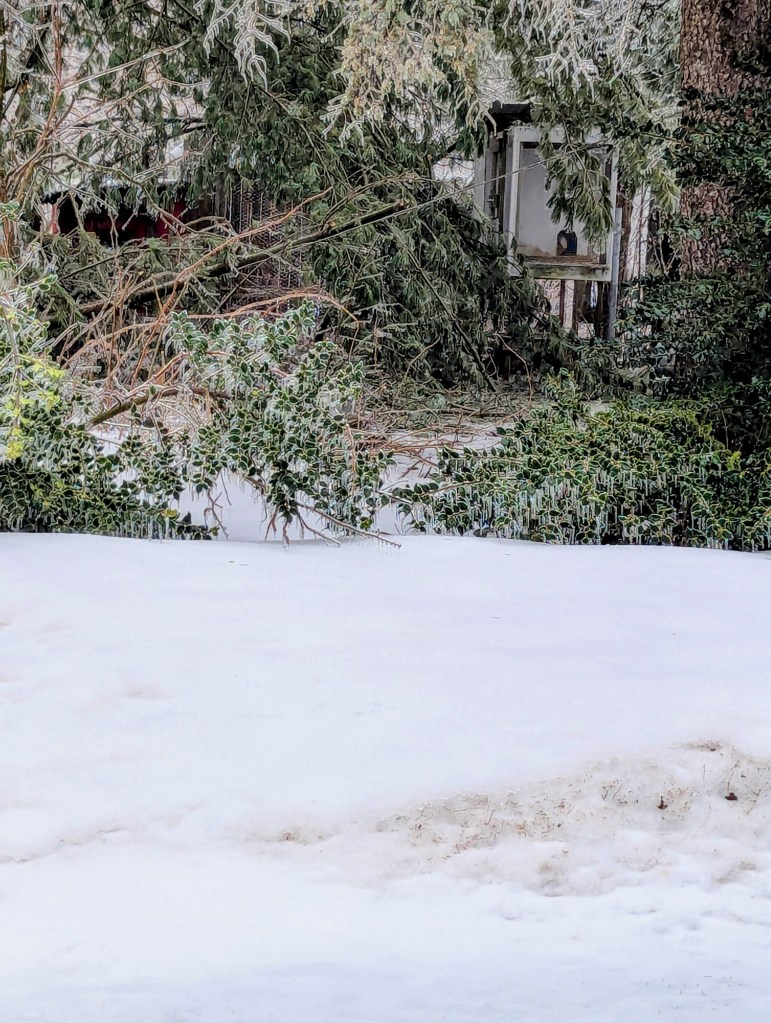
Day two began with the trees breaking with a sound like a rifle shot followed by tops of trees falling to ground. Many people had large branches fall on their roofs. We were fortunate in that our home, barn, and cabin/garage were spared.
Rabbit Hutch April 1, 2025
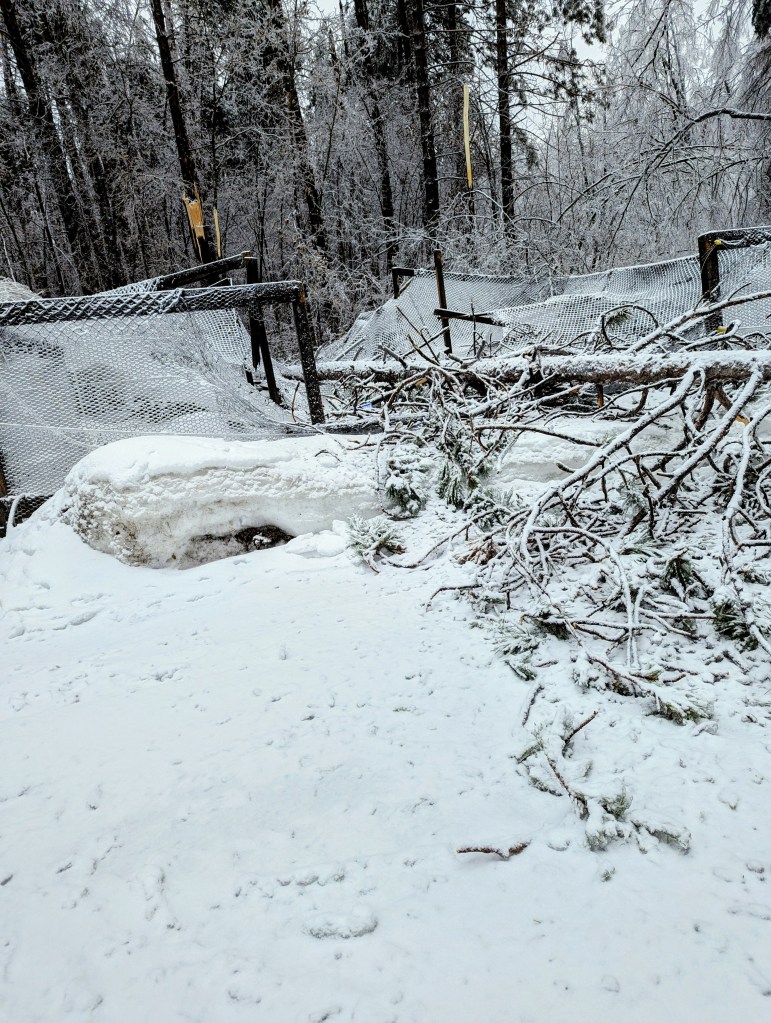
Then, on day three, a large red pine tree on our neighbor’s tree plantation fell – not just the top of the tree but the entire 70 foot tall thing. And fell smack on top of our main aviary and ponds.
Large Aviary March 31, 2025
The pheasant and quail pens also took a good hit and are still awaiting some repairs.
Thankfully, we had moved some of the most valuable birds inside a day earlier. The ones that remained outside had a bad time of it. Some of them flew away (we keep the birds full winged). The rest we caught, but some of them died due to the stress of the storm and its damage and/or internal injuries they had sustained.
We do have other smaller aviaries that did not take much to repair and that have given water and open air to them, which is necessary to raising healthy waterfowl.
As we rebuild the aviary and continue to deal with storm aftermath, we ask for your patience. We are caring for our remaining birds as best we can and have raised some young ducks. At this time, we do not have the larger inventory for sale that we have had in the past.
It has been a real struggle for the birds and for us as well, and we are thankful to have had the mild success that we are blessed with. But this means that we are going to attend only a handful of swap meets this fall and will bring along what we do have for sale. Online orders will be limited as well. The dates of the swap meets at which you can find us for fall of 2025 are:
I spent my early gardening years working with dirt and a rear tine tiller. When that tiller died close to eight years ago, I had to change my method or cough up a ridiculous amount of money to buy a new one. Since money was precious (and is even more so in today’s world), I opted to go without and try something different.
Since I had only spent forever tilling the ground until it was powder, I wasn’t sure what I could do with a rather hard surface. So I researched different methods of no-tilling. There are a surprising amount of different opinions as to what works best. I will highlight the couple of methods that have worked for me.
Ruth Stout wrote a marvelous little book called Gardening Without Work. The premise is, mulch, mulch, mulch every bare spot in the garden and that mulch will suppress weeds as well as help hold in moisture. This leads to less having to water the garden. Ruth’s preferred mulch was moldy hay.
I have tried Ruth’s method of mulching. One year I used mowed grass as the preferred form of mulch. I kept my rows fairly close together and placed newspaper and/or cardboard down on the “pathways”. Then, I put the freshly cut grass on top of the paper barrier. Every time we mowed grass, those clippings went into the garden. I had a beautiful garden when I did this. I didn’t use anything but that grass most of the time, but it didn’t seem to matter. The plants grew large and beautiful. The times I did actually compost, I would just throw compostable material at the edge of the garden and sprinkle the compost around some of the plants when it had decomposed enough.
Insect damage was always something to battle, but I used homemade insecticidal soap when I had to resort to spraying something on the plants. Gardening Without Work has some recommendations concerning pest control, even my past nemesis – the ground squirrel as well as my current nemesis – the white tailed deer. The only deterrents that worked for me is electric fencing for the deer. As for the ground squirrels (wicked little things that used to eat off the bottom of pea pods and suck out the peas, leaving the empty pods on the plant), nothing really works. They find a way into the garden no matter what. You can try live traps, but you’ll never get rid of all of them.
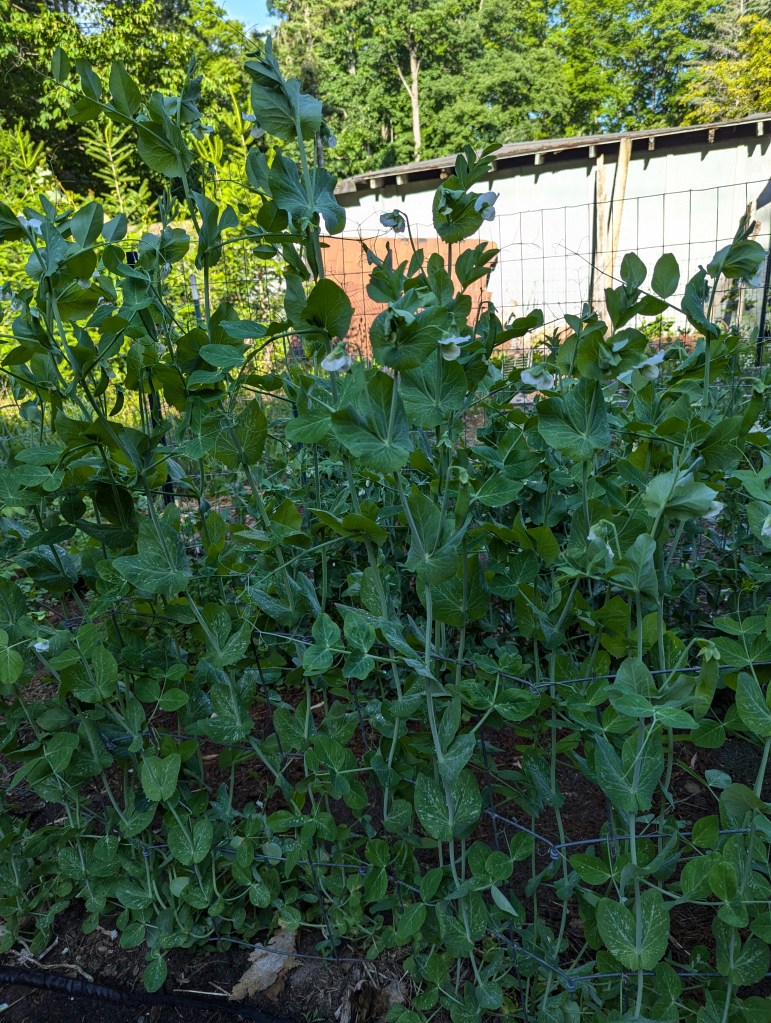
Peas doing well thus far
We moved from that garden a while back and I have not purchased a tiller yet. My garden size increased a lot, and it became difficult to mulch using those grass clippings, mostly because we don’t really have grass on this property. It’s more like weeds, and it’s sparse. We bought a riding mower and do not bag the clippings anymore.
Now, I do compost a lot more and I do maybe a Back to Eden gardening style along with what Charles Dowding calls No Till with a little mulch and as much compost as I can produce myself thrown in. For a couple of years our compost was largely composed of broken down goat and sheep bedding. We compost kitchen waste (only the organic stuff). We use wood for heat in the winter, so we toss in some ashes from time to time. I rarely throw in weeds, because I toss those to the chickens. Rhubarb leaves get composted, but sometimes they just are laid in the garden as a weed barrier. Ruth Stout might have called that mulch too.
Since I have trouble producing enough compost to amend the garden each year, I do toss different natural fertilizers around in the fall. I’m not too picky other than the fertilizer has to be organic. In the spring when I plant, I fertilize with blood meal. Depending on the needs of the plants, sometimes bone meal gets spread too. And then there’s lime, which helps with certain plants. Tomatoes get a dose of lime and a dose of blood meal at planting time. Melons like a little lime now and again during the growing season. If you grow sweet corn, you will want to stock up on nitrogen fixers, like blood meal – corn gets hungry for them. My confined bag of Chocolate Mint needs little fertilizing, but I do put a bit of blood meal in the grow bag. This plant is going crazy already this year!
Chocolate Mint surrounded by Raspberries
I utilize flattened out cardboard as weed suppressers. Given I have a problem with slugs, however, that is sometimes not the best option because slugs often hide underneath. I do not always grow in nice rows as I used to, but rather grow in little “beds” that I map out using a really nice online garden planner. My goal is to have raised beds all over the garden, but thus far I have only two. They need to be filled and that gets pricey unless you have lots of compost at home that you didn’t have to buy yourself. The lasagna style methods of larger compostable items (small logs, branches, etc.) covered with less and less heavy stuff but more and more pure compost, works well, but that first layer can take forever to break down. That can cause plants that put out deep roots to struggle.
Keeping up with weeds is key to a no till garden. I try to go over the whole thing with a push-pull hoe. Anything between plants gets pulled by hand. Yes, it’s work and not Ruth Stout’s original premise, but it works for me to put in the labor. As I get older, I need to remember to exercise. Gardening provides that exercise for me and gives me a boat load of satisfaction.
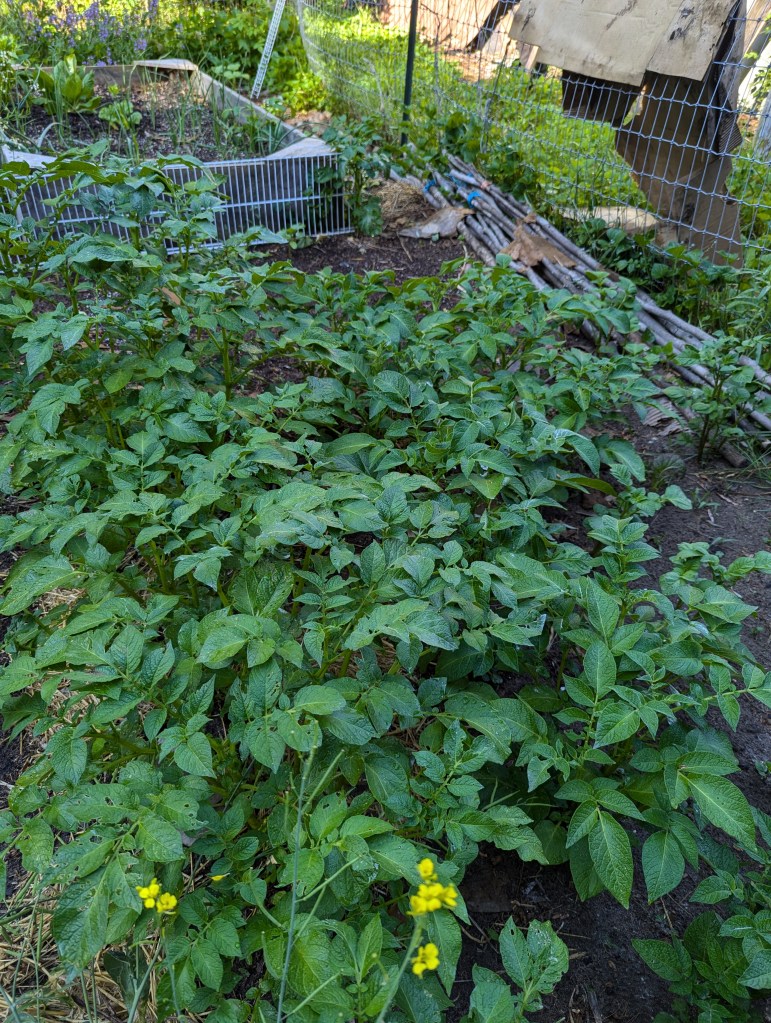
Potatoes
Come harvest time, I’m pleased. Though my garden is not conventional in the eyes of many, it’s very good for me. This year, though, I have been thinking about creating a garden in a different area of the property. Where this garden that has worked well in the past sits, trees from neighbors behind us and to the south of us are crowding out the sunlight more and more. It’s time to rethink things. Because of those lessening sunshine hours, I decided to put my melons in grow bags and grow them close to my greenhouse, trellising them. It should be fun. Again, experiments.
Sometimes change is good. Don’t ever be afraid to try something new. At worst, you might have a great learning experience. At best, you will find a new method of doing something that creates joy for you. I wish you the joy.
The American Wood Duck is found in most areas around the United States and the southern part of Canada. During the winters, they tend to migrate from the northern areas to more southerly ones.
This colorful bird was once nearly hunted into oblivion. Habitat dwindled as well, which contributed to the loss of the Wood Duck. However, according to the U.S. Fish and Wildlife Service, numbers are now strong with about three million breeding pairs across the continent today.
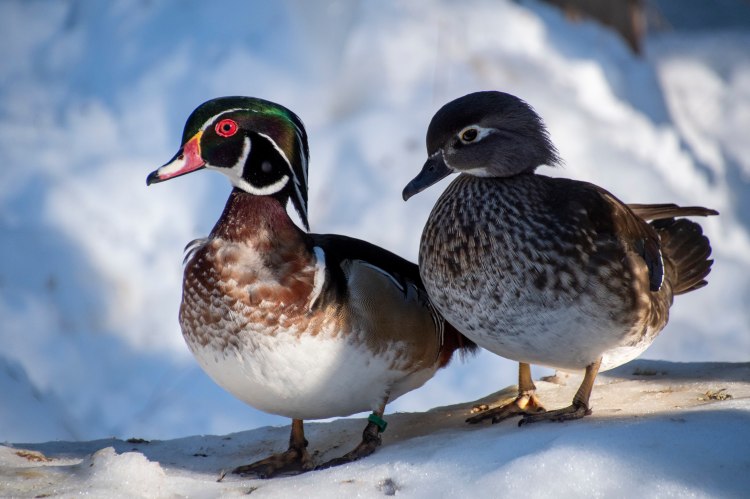
Wood Ducks are an average sized duck, weighing about 2-3 pounds. The males can easily be spotted when in color because they have a distinctive green, blue, and purple head. Their bills are a reddish pink and their eyes are red. The females are a smoky brown color and have a distinctive white ring around their dark eyes. They have a blue iridescence in their wing feathers. Their bills are a smoky color – not red as on the males.
Because Wood Ducks like to land on “perches” and lay their eggs in hollow trees or specially made Wood Duck boxes, they are sometimes called perching ducks. They are dabblers, not divers. Their favorite foods are acorns, seeds, and grains they might find in farmers’ fields.
Wood Ducks are very easy to raise in a home aviary. They, like all ducks in captivity, require some sort of water. This is especially important in the winter, as it is necessary for the ducks to stay warm. Also, all ducks need a water bath now and then to remove excess oils from their feathers and to generally keep clean and in prime condition. A small pond or pool is fine in an aviary setting, depending upon how many birds one has in the aviary.
You should have a fenced and covered area in which to keep them, especially if you have a lot of natural predators or the birds are full winged (as in all birds purchased from Lifesprings Farm and Aviary).
A common question asked is, “Do I need any special permits to keep Wood Ducks?” The short answer is, “Yes”. The American Wood Duck is native to the United States and, therefore, cannot be kept in a captive setting without a permit. When you purchase Wood Ducks from Lifesprings Farm and Aviary, you will be asked to sign a Federal Sales and Disposal Form that shows we transferred native birds to you. For the permit that is required, you should contact your local Department of Natural Resources for a permit to keep waterfowl in captivity. This is not expensive and is easy to do with a DNR officer.
If you choose to keep a pair or two of the American Wood Duck, you will have some of the most beautiful ducks that our continent has to offer. Maybe you will be fortunate enough to watch a pair raise babies in the wild. If you have water on your property that ducks like to visit, consider putting a wood duck box up. Then watch the fun.
The Smew is a striking little merganser found primarily in Eurasia (mostly Russia and Scandinavia), though some sightings have placed them in British Columbia, Alaska, and even the state of Washington. These sightings are fairly rare, however. Since no other duck in North America or even Canada looks close to the Smew, getting them mixed up with another species of duck would be impossible. They summer on lakes and slow rivers that are filled with fish. In the winter, they head to more sheltered coastal areas or inland parts of the Baltic Sea, the Black Sea, and Northern Germany.
During the nesting season, the female Smew looks for a woodpecker hole or other holes in trees, much like a wood duck will here in North America, in which to lay her eggs.
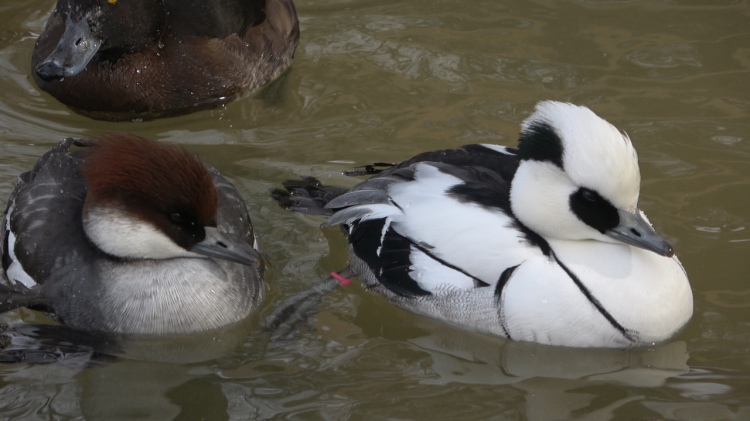
The female has a brown/red head, white throat and white cheek patch. Penciled lines cover her chest. Her mate is a bright white overall with black patches on the face and head, sides, and back. He also has some penciled lines on the sides of the breast and flanks. Both males and females have the signature pointed looking bill of a merganser.
The Smew is a diving duck that eats fish, larvae, and insects. In our aviary here at Lifesprings Farm, a special treat is dried mealworms and the friendly little ducks will almost get underfoot as they wait for their mealworms to be tossed into the water.
The Smew, or Mergus Albellus, is a lively little merganser that is not only beautiful, but is also lively and fun to watch. A bonus is its friendliness.
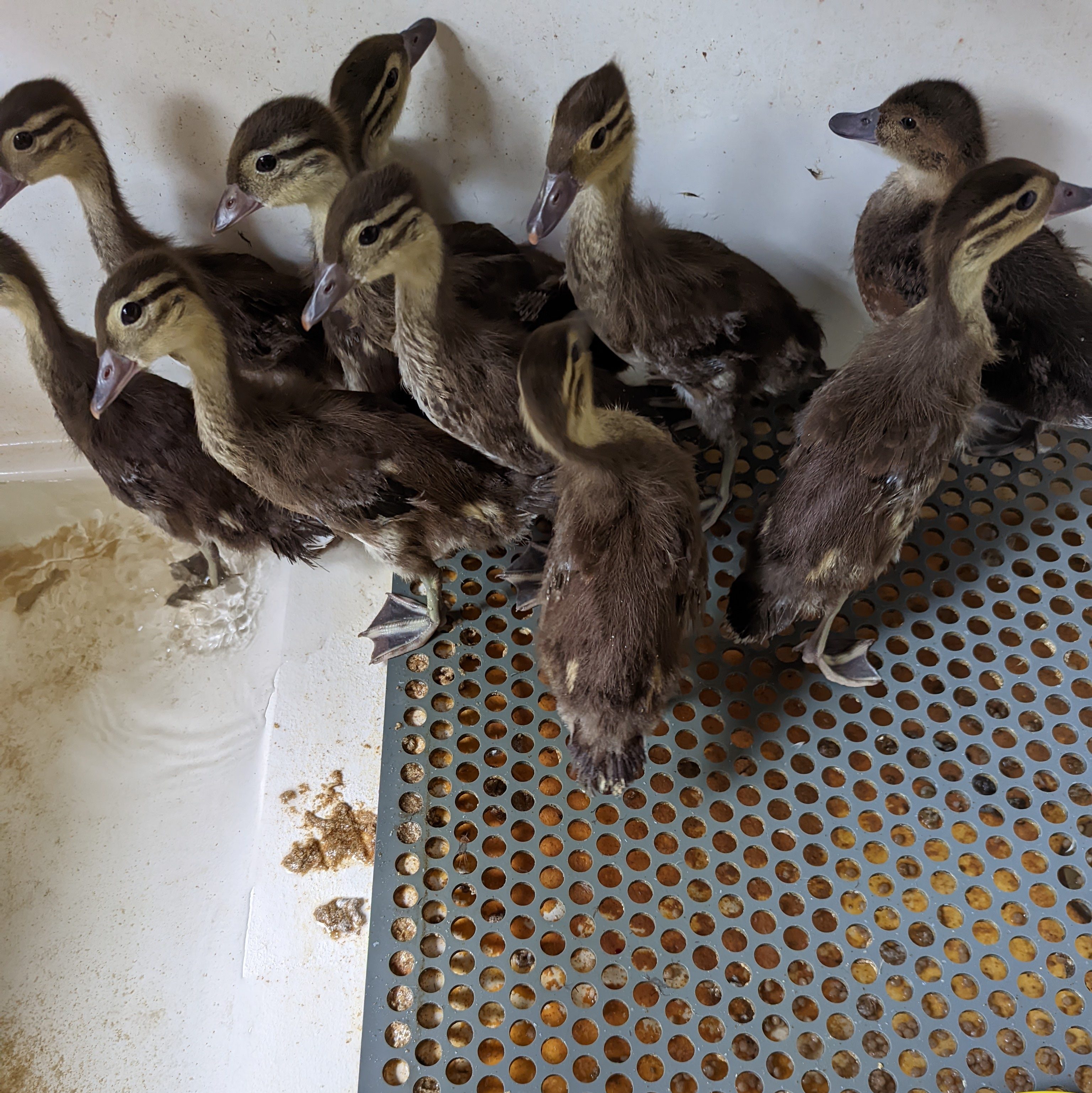
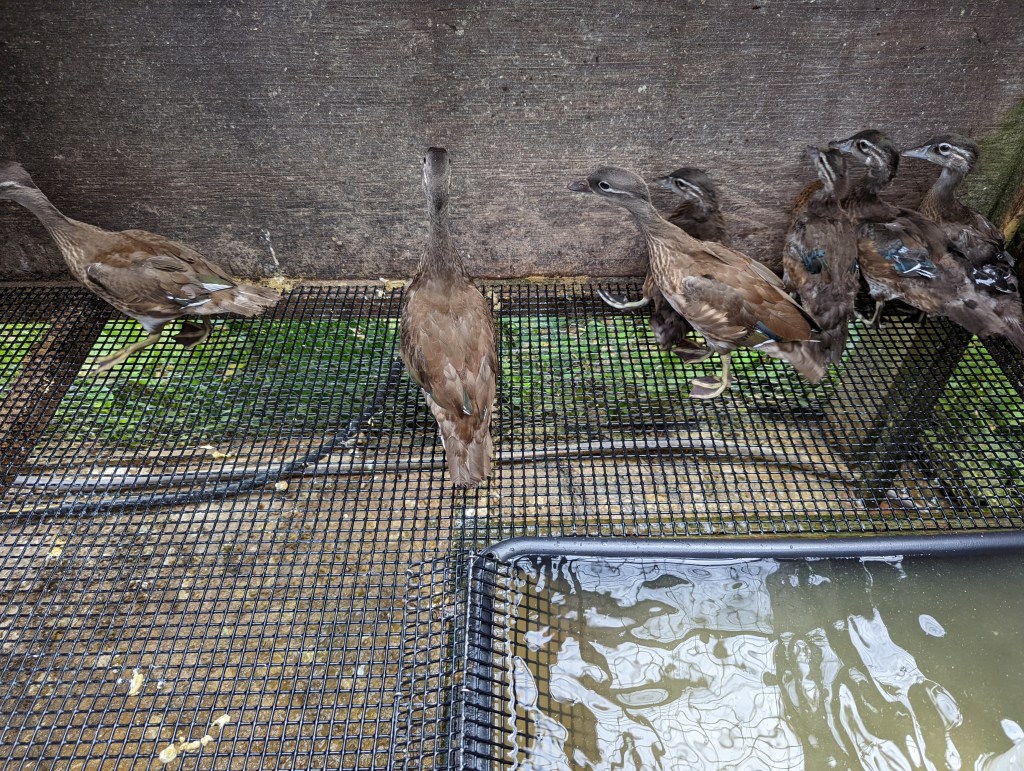
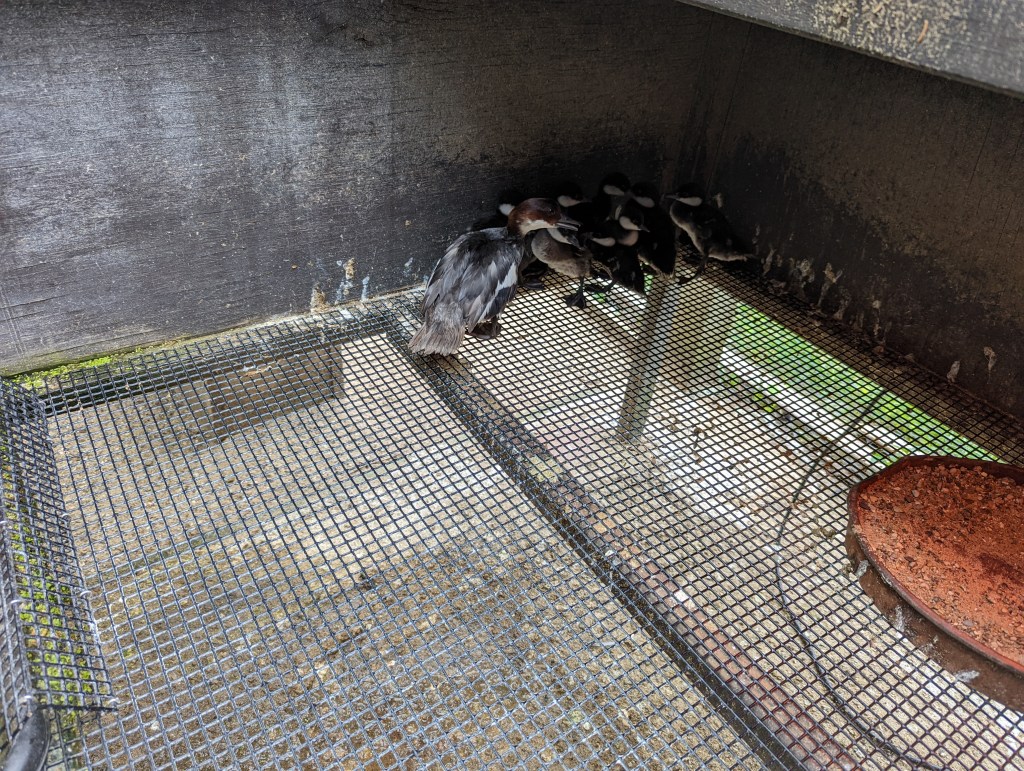
We have begun our summer season in the aviary and this year’s hatch is looking good. I thought I would share with you some of the little birds that are growing fast. There are still birds laying, such as the Baikal Teal. Jeff showcases this beautiful duck in his latest YouTube post at: https://youtu.be/37TPgDwgaOg
Mandarin Ducklings
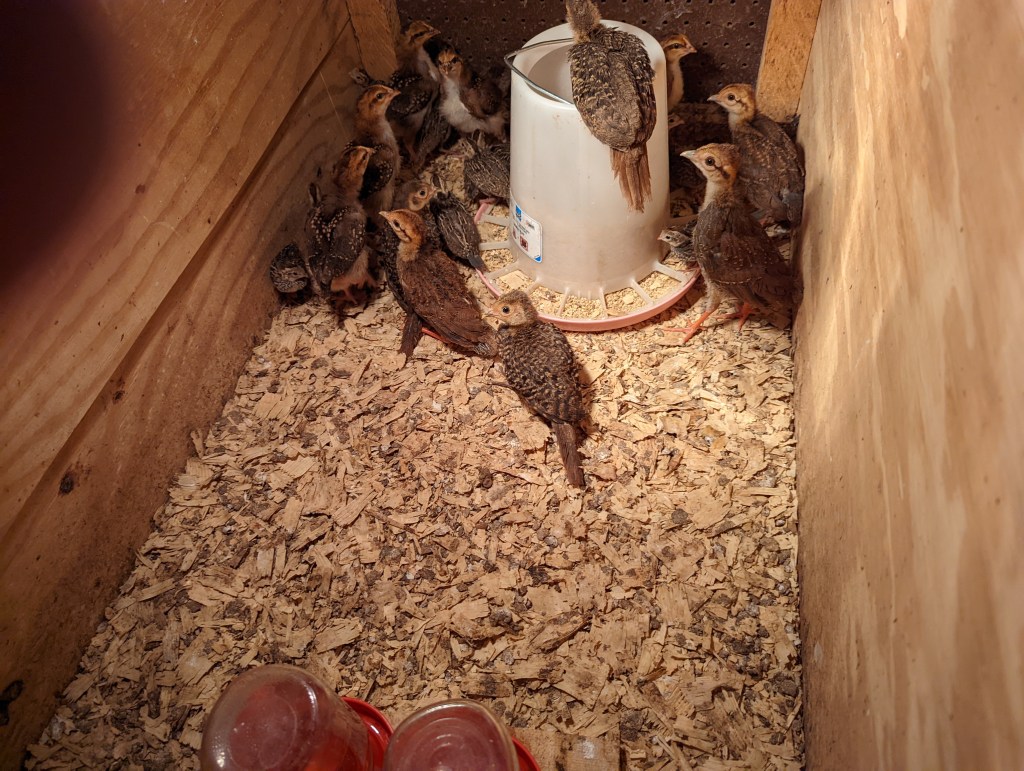
Wood DucksSmew Hen with DucklingsPheasants and Quail
I have visions of spring gardening dancing in my head for real. Today is sunny but cold, only a high of 23o F. Spring doesn’t reach the zone we are in, 4b, until sometime in May. However, the dreaming goes on and with it, semi-plans memorized or put onto paper (or into a computer).
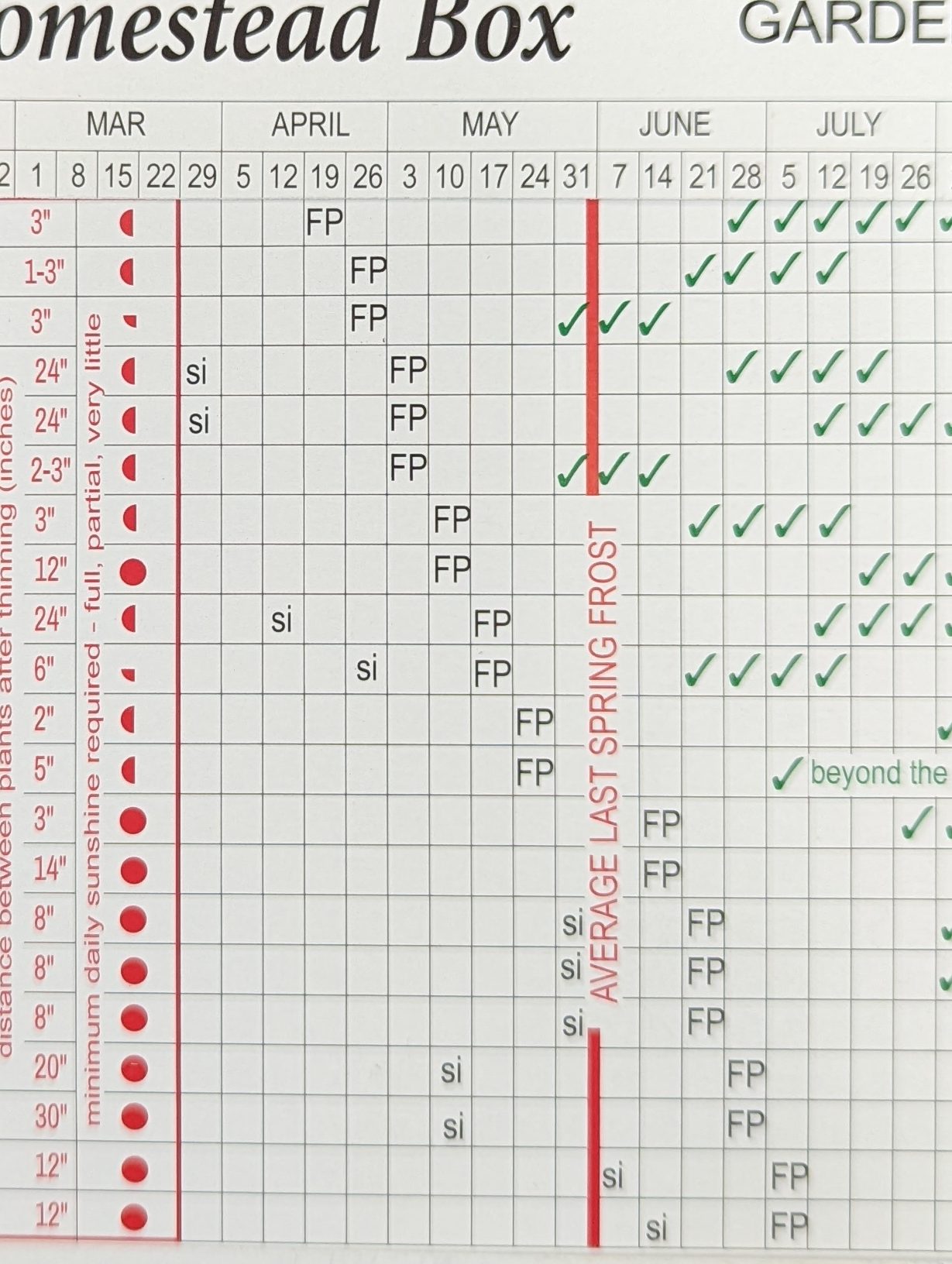
During my dreaming time this morning, I got out two of my favorite pieces of garden helps. The first one is a garden planner that I got from Hoss Tools. What I love about it is that I can easily see the best date to start most plants for transplanting. I tend to start peppers and onions sooner, as they take forever to grow. I am fortunate because we have a greenhouse, albeit a small one. If you don’t have a greenhouse, don’t despair. You can use a sunny windowsill and rotate your plants daily (the plants will try to reach for the sun and will need to be turned so they can grow uniformly and not get leggy).
The planner also has first outdoor planting dates. We get our last frost sometime around the end of May. Most people up here don’t plant frost sensitive stuff until June 1 at the earliest. I am always in a hurry and put seeds in the ground about the 25th of May. Frost doesn’t hurt plants that haven’t emerged from the ground yet. For assurance this year, I have purchased fleece ground cover for the early days. In the past, we have used buckets and blankets to cover plants. The blankets always crushed plants and the buckets worked as long as we remembered to put a rock on each one. One drawback to using the row cover or blankets is that frost can often still make it to the plants if the covering is touching the plants. I wish I had known that when I was younger.
This planner also has companion planting ideas, such as putting pumpkins, melons, squash, cucumbers, potatoes, peas, and beans in the same area. I am planting my friend’s heirloom parsnips (seeds passed down for generations in her family) this spring. I have never grown them before. There is no parsnip setting on the planner, so I will assume they can be treated like carrots. I watched a YouTube video by Charles Dowding on the subject of planting parsnips. I recommend it highly.
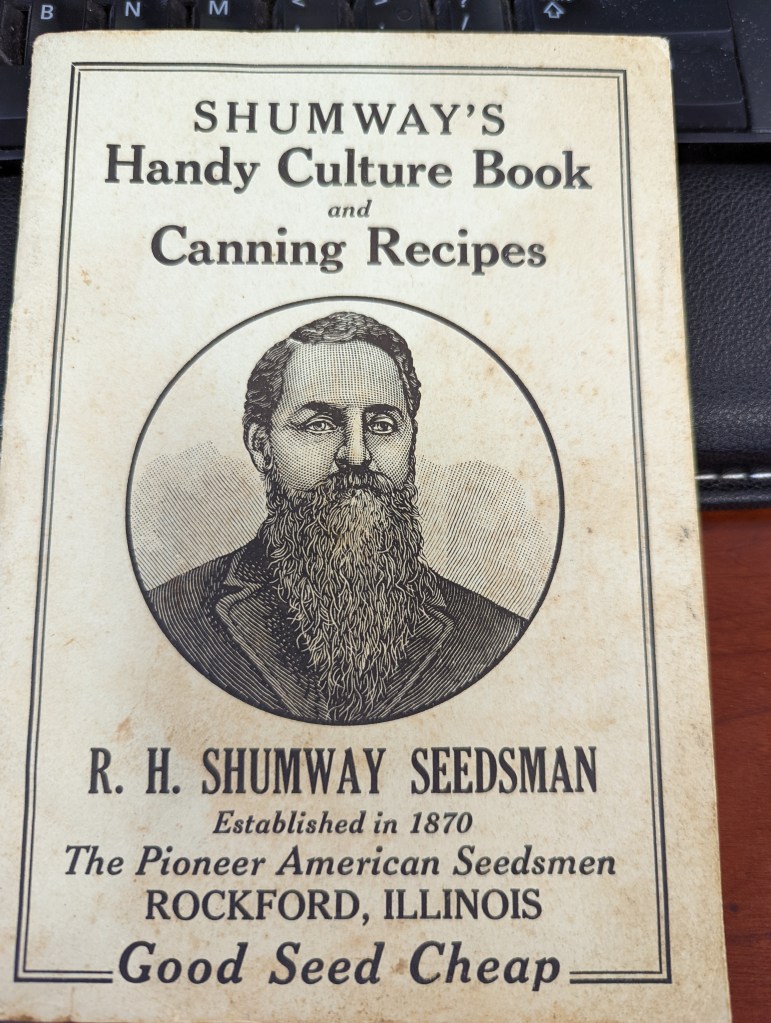
Something else that I like to pull out each spring or late winter is This Shumway’s Handy Culture Book and Canning recipes.
I have no idea when this was published!
My dad had a dairy farm in Indiana for years and this was his booklet. He always ordered his garden seeds from Shumway and he swore by that company. When my dad passed into Heaven in 2020, I inherited most of his farm and garden books. I absolutely love the advice this booklet gives. Keeping on the parsnip theme, here’s an example:
The Parsnip requires a rich soil and frequent cultivation. Parsnip seed being slow to germinate it is advisable to mix a little Turnip shaped Radish seed with it before planting. The Radish will be up in a few days, allowing Parsnip to sprout more freely. In small beds lay a flat board over the rows for about a week, this will hold moisture and prevent ground from caking, insuring satisfactory results.
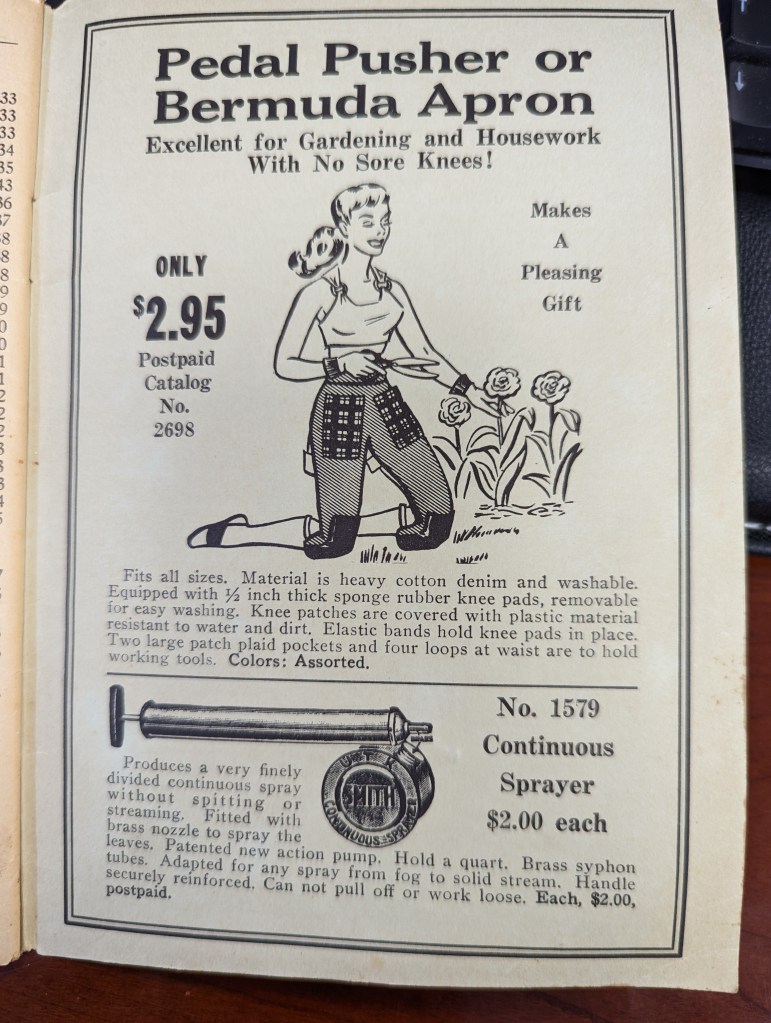
The canning recipes in the back are pretty much in the form of a canning table. I think a lot of the guidelines concerning safe canning have changed a bit over the years. However, it’s still interesting. And speaking of interesting, I think the ads in the booklet give an clue as to how old this booklet really is:
An ad in Shumway’s Handy Culture Book and Canning Recipes
I hope you can get out there and get a garden started this year, whether it is a tiny one or a very large one. And don’t forget to dream.
At this time of year, every homesteader or prepper seems to be planning their garden. They use charts and other tools to perfectly plan what they want to put in the space(s) that they have along with just where each plant will be.
I’m not that organized. Last year, I put a lot of information on paper. I decided what to plant, where I wanted to plant it, and when to either start it in modules or straight in the ground.
Let me just say, that was *almost* a waste of time. In the end, I did calculate what veggies I wanted in the garden (and in the greenhouse) and I did put on paper the best times to start them, whether as plants to later transplant, or sowing straight into the ground. I just didn’t go as far as getting a lovely diagram of my dream finished.
Keeping the log of what I was growing and when to start, was a good idea. It helped me to not forget something when the actual time came to get growing. I can recall past years when I would remember that I really wanted to plant that new variety of cucumbers but forgot that I had the seeds, or I would forget to get peppers started early enough and by the time the first frost came in the fall, my beautiful pepper plants were already done for before they had even begun producing.
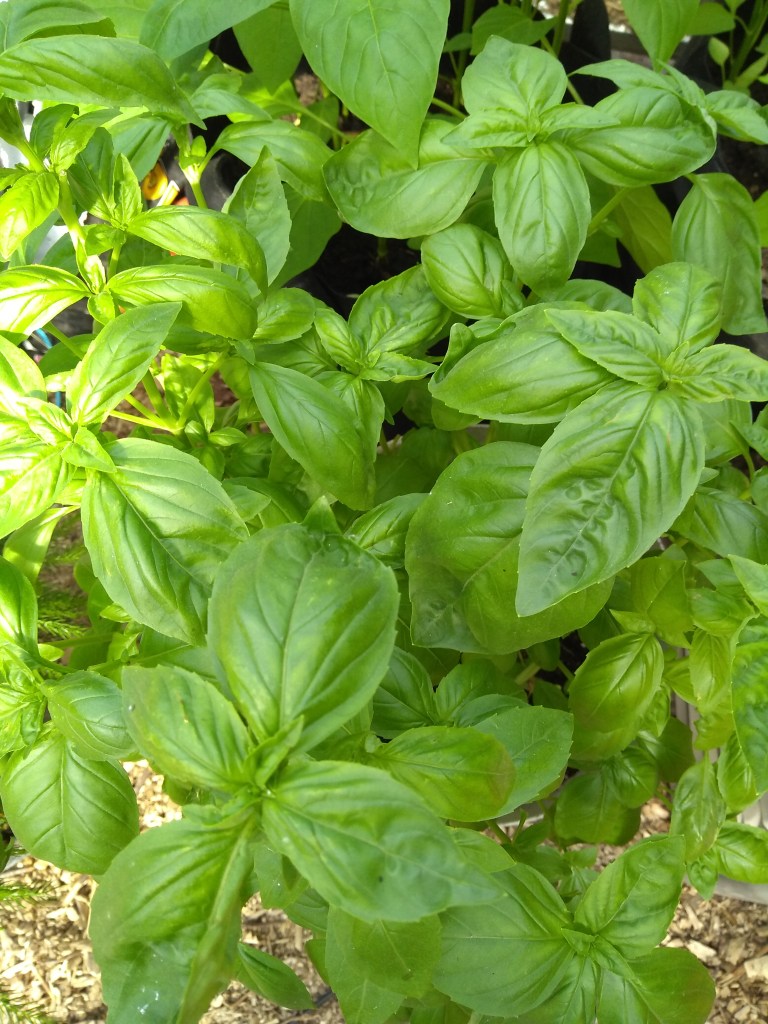
This year, I started to pencil my garden rows on a drawing of my actual garden space to realize that I don’t have room on paper to put everything I want in there. Hmmmm. Funny how that works. In reality, I am about to fill out a chart that tells me what I want to grow this year, which garden in which to put them – raised bed in the outside garden (I only have one so far), in the ground in the outside garden, in grow bags spread around the upper garden or around the greenhouse, or in the greenhouse itself. My greenhouse only has two raised beds in it and given that it’s only about 10 feet long and about 8 feet wide, I must be selective. Usually, I grow tomatoes, shishito peppers, and basil in there.
I always record what I grew and when I started them and then transplanted them. If something did not germinate and/or transplant well, I record that too. I always intend to record what varieties produced well and for how long, but somehow I get too busy and forget. I do, however, remember when I’m planting in the spring that this variety or that one did not do well in previous years.
I hope you have your seeds ready to go this year and are as eager as I am to get started. Gardening is my passion and it often keeps me sane. I’m praying for a good year, but who knows? We don’t have control of the weather. We do have control over our attitudes and our willingness to work hard. This week I’m going to plant some peppers and onions in modules and keep them warm in the house. Later, as they emerge and the greenhouse warms up a little more, I will move those plant starts out there. I will, at that time, begin other starts with a late May/early June planting time in my mind’s eye. Will I succeed? I don’t know but I plan to give it my best shot.
Wishing you the best with your gardening this year.
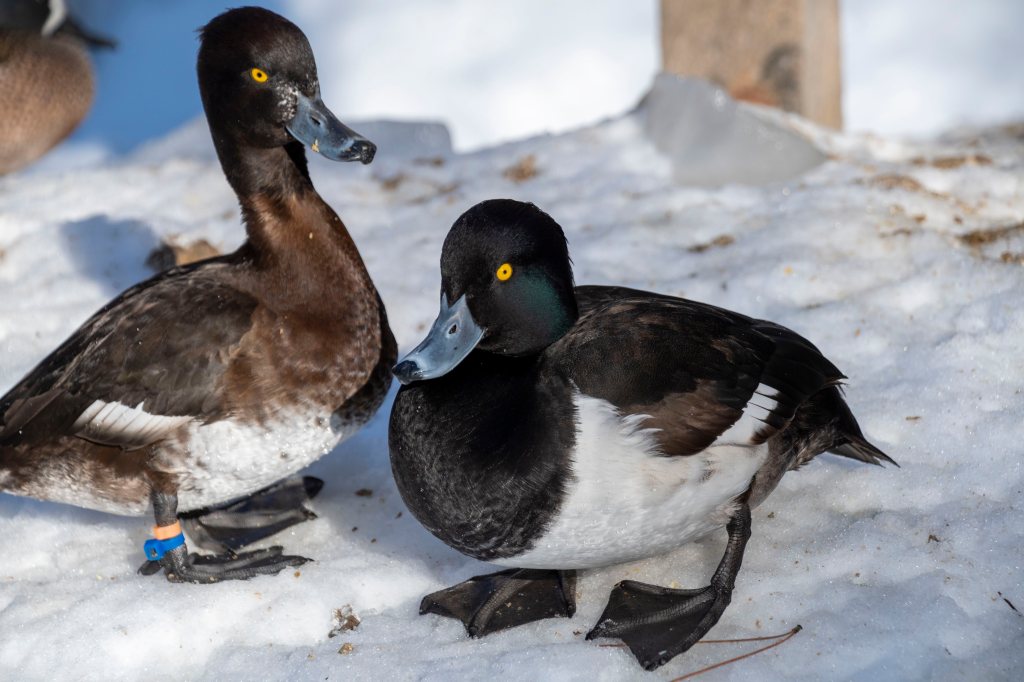
The Tufted Duck is a Eurasian duck that , in the winter months, is usually found across Asia, Europe, and Africa. It is a diving duck that will sometimes reach the eastern and western coasts of North America during the fall and winter migrating season, but this is lesser common. During the breeding season, they will go as far as Siberia and Iceland.
Tufted Ducks are somewhat smaller than mallards and the males are solid black with white sides. They also have a “tuft” on the back of their heads. Females are brown with a bit of white on their bellies. They might have a “tuft” as well, but can also have none. Their legs and feet are black as are their broad bills. Tufted ducks are sometimes confused with Ring-necked Ducks and scaups. They sometimes interbreed with Greater Scaups, which can be confusing for those trying to identify them.
We have found the Tufted a great species to raise in an aviary. Diving is their second nature, so they require ponds or pools that give them ample opportunity to dip under the water. They are not aggressive and get along well with other species. Of course, we do not have the small shellfish and crustaceans that these ducks so enjoy in the wild, but we have found that they will eat mealworms and duck pellets.
Birdwatch Ireland has a nice website with basic information but especially nice photographs, as does Animalia.
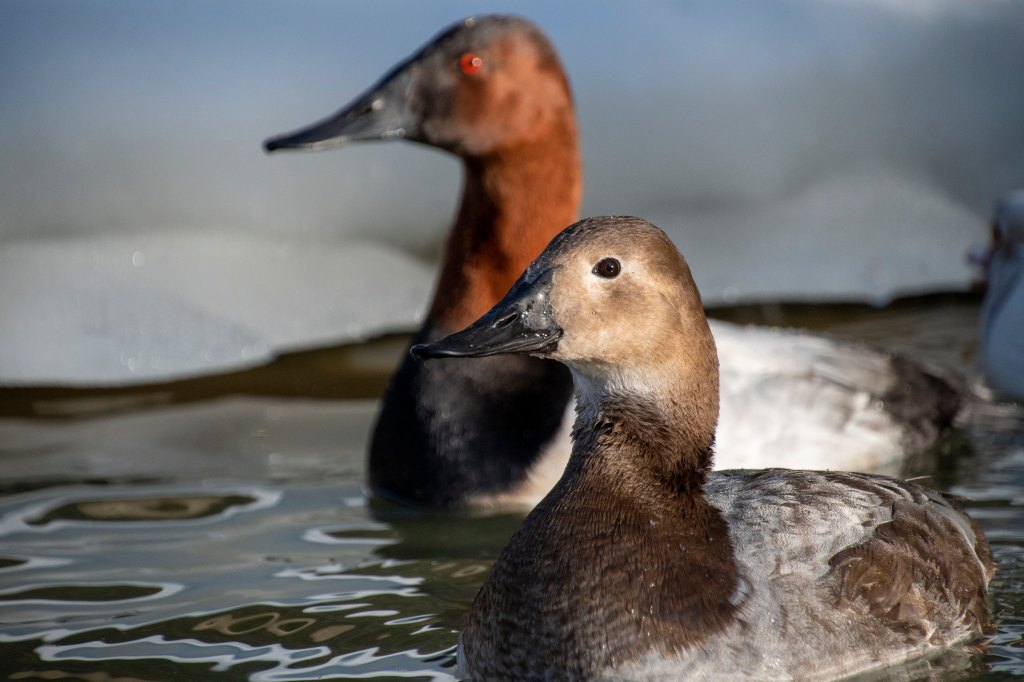
The Canvasback Duck is a relatively large diving duck that is successfully raised in private collections, though its natural habitat is lakes and marsh areas across North America. In the winter, they migrate to the coastal shores and some inland lakes that do not freeze over. In the summer, they can migrate as far north as the Tundra.
Canvasbacks are diving ducks, so they dive in shallow water to feed on the bottom. Their diet consists mainly of vegetation such as plant tubers and seeds, as well as pondweeds, wild lettuces, and wild celery. On occasion, they will also eat mollusks, insects, and small fish.
Here at Lifesprings Farm and Aviary, we have found that they love it when we throw dried mealworms into the water for them to retrieve.
Identifying Canvasbacks is fairly easy, though they do resemble a Redhead Duck. Canvasback Duck females are a pale brown and gray, and have dark eyes. Breeding males, however, have white bodies with black on the chest and the rump. Their heads are a chestnut color and their eyes are red.
According to The Cornell Lab, their size is somewhere between a crow and a goose. They can weigh anywhere from 30.4 oz to 56 oz. Not only do they look similar to a Redhead, but they are nearly the same size, with Redheads being slightly smaller.
This summer in our aviary, we have hatched and are raising some Canvasback ducklings that we will have available for sale later in the season. They are a fun bird to watch dive and play on the water. Keep watching for further updates on the sale pages.


 Life-Springs-Farm and Aviary